Player Pathways Through Diverse Gaming Options and Reliable Transaction Systems in Digital Casinos
Written by Devon Patterson · Sep 3, 2026
Player Pathways Through Diverse Gaming Options and Reliable Transaction Systems in Digital Casinos
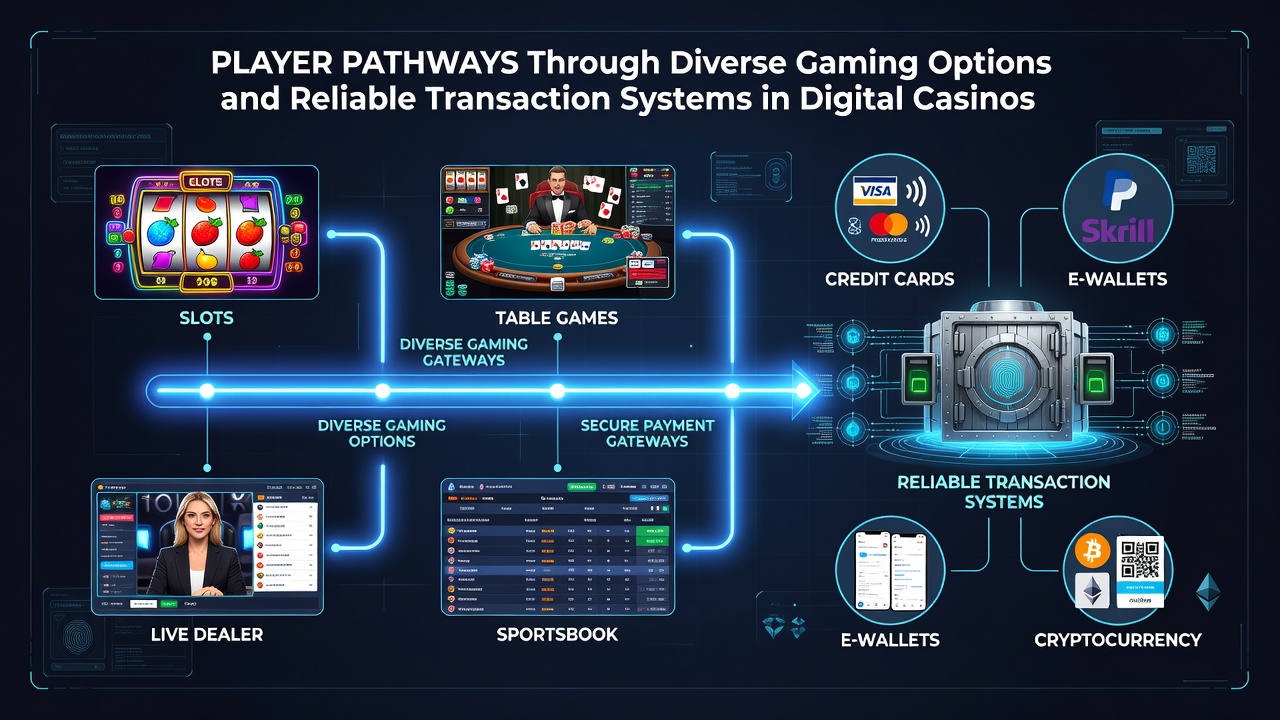
Digital casino platforms organize player movement across game selections and payment functions through structured sequences that begin at registration and extend through repeated sessions. Users typically start by selecting from categories such as video slots, table games, and live dealer environments, then proceed to funding accounts via integrated methods that support instant transfers and record keeping. Research from the American Gaming Association indicates that platform architectures route activity between these elements using centralized dashboards, allowing transitions without separate logins or re-authentication steps.
Navigation Patterns Across Game Varieties
Operators design interfaces that group titles by mechanics and themes, which guides players from initial selections toward preferred formats while maintaining session continuity. Data shows that many users alternate between reel-based games and card tables within single visits, supported by persistent balance displays and quick-launch buttons. Those who study user logs note that pathways often include recommendation engines that suggest alternatives based on prior play duration and wager patterns, creating loops that extend engagement across multiple genres.
Live dealer sections connect through separate streaming layers yet share the same wallet systems as automated options, enabling seamless switches mid-session. Observers report that September 2026 regulatory reviews in several jurisdictions will examine how these connections handle latency and fairness verification, particularly when cross-device movement occurs. Players on tablets or phones encounter adapted layouts that preserve the same category organization, although touch controls replace mouse inputs for menu navigation and betting.
Transaction Integration and Security Protocols
Reliable payment frameworks sit behind every game selection, processing deposits before play begins and withdrawals once sessions conclude. Multiple methods operate in parallel, including bank transfers, digital wallets, and prepaid cards, each routed through encryption layers that meet industry standards for data protection. Studies from iGaming Ontario document average processing times that vary by method yet remain consistent across large user bases when platforms apply real-time verification checks.
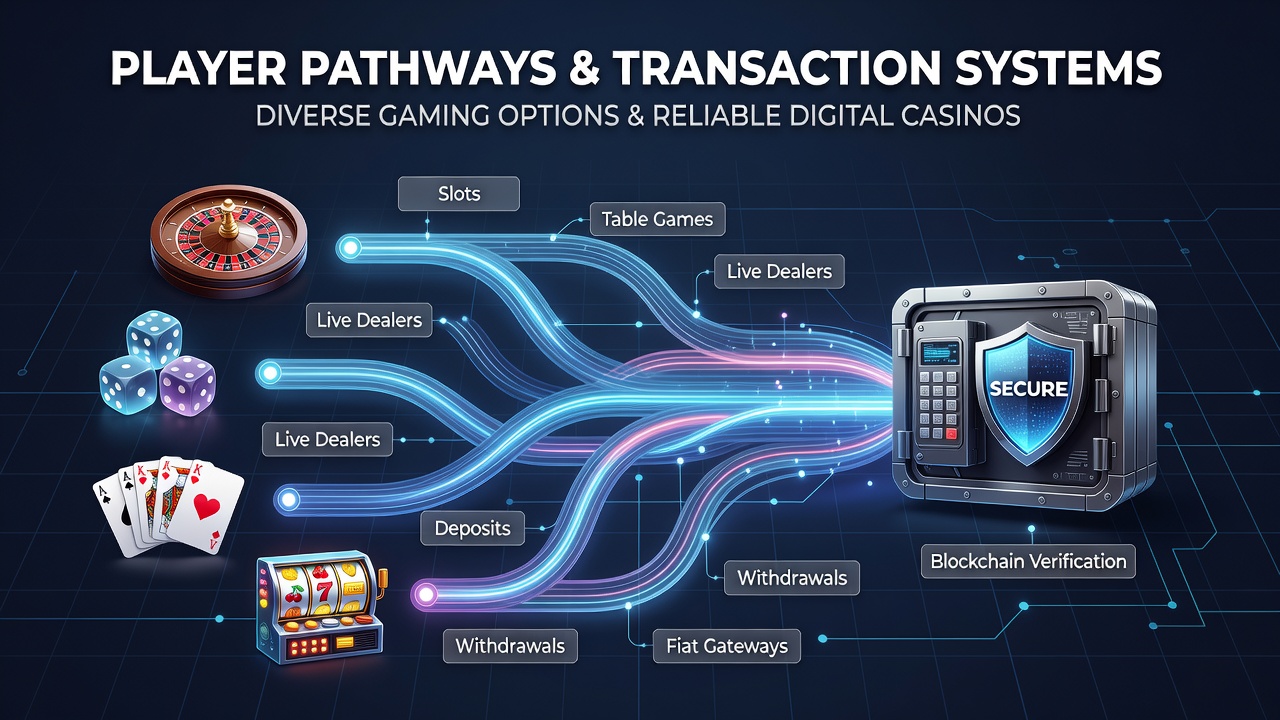
Transaction logs feed back into player profiles, which in turn influence personalized game suggestions and limit settings. This closed loop allows systems to flag unusual activity while users move between high-volatility slots and lower-stakes table options. Experts tracking platform updates observe that redundancy measures, such as backup processors, activate during peak hours to prevent interruptions that could break a pathway mid-transition.
Mobile and Cross-Platform Continuity
Portable devices extend these pathways beyond fixed locations, with applications mirroring desktop structures but optimized for smaller screens and variable connectivity. Users frequently begin sessions on one device and continue on another, with cloud-synced balances and game states preserving progress. Figures from the Canadian Gaming Association reveal rising adoption rates for such synchronized access, especially among players who alternate between short mobile sessions and longer desktop play.
Security remains embedded at each step, with multi-factor prompts appearing at funding points regardless of device. Those monitoring compliance note that upcoming framework adjustments scheduled around September 2026 aim to standardize reporting on cross-border transaction flows without altering core player routes.
Support Structures for Sustained Access
Help centers and automated tools assist when pathways encounter friction, such as payment declines or game loading delays. These resources connect directly to transaction histories and game logs, allowing rapid resolution while the user stays within the platform. Industry reports highlight that integrated chat functions reduce drop-off rates by guiding players back to active sessions rather than forcing restarts.
Regulatory bodies in multiple regions require operators to maintain audit trails that document every transfer between gaming modules and payment processors. This documentation supports both user protection and operational reviews, ensuring that diverse options remain accessible through dependable financial channels.
Conclusion
Player pathways in digital casinos function through interconnected systems that link game exploration with transaction handling, supported by consistent interface design and security layers. Evidence from regulatory and industry sources demonstrates that these structures accommodate varied preferences while maintaining record integrity across devices and sessions. As platforms evolve, continued alignment between gaming options and payment reliability will determine how users navigate these environments in coming years.